12 Specimens · 10 Localities · 9 Crystal Forms
Specimen
Gallery
Explore natural gold specimens from the world's great producing regions — by locality on an interactive globe, or by crystal form in the shape browser.
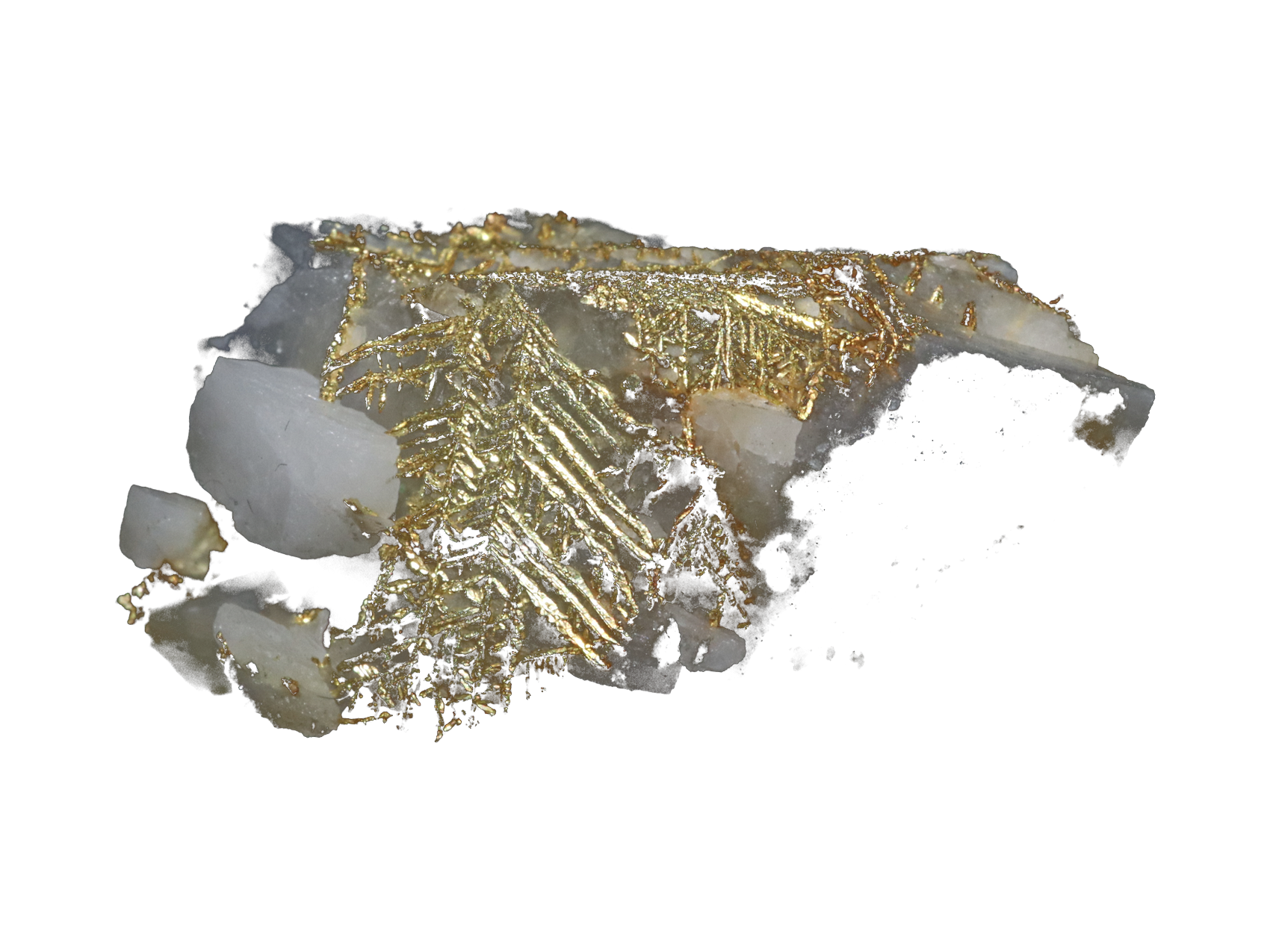
12 Specimens · 10 Localities · 9 Crystal Forms
Explore natural gold specimens from the world's great producing regions — by locality on an interactive globe, or by crystal form in the shape browser.
Crystal Habit
Gold always belongs to the cubic crystal system — its atoms arrange in a face-centred cubic lattice. Yet the outward form a crystal takes (its 'habit') depends on the conditions of growth: temperature, pressure, growth rate, and the chemistry of the surrounding fluid.
Slow growth in open cavities produces perfect cubic or octahedral crystals. Rapid crystallisation creates dendritic and wire forms. Transport and erosion produce rounded nuggets. Each habit is a geological signature — a record of the exact conditions deep within the Earth where that gold formed.